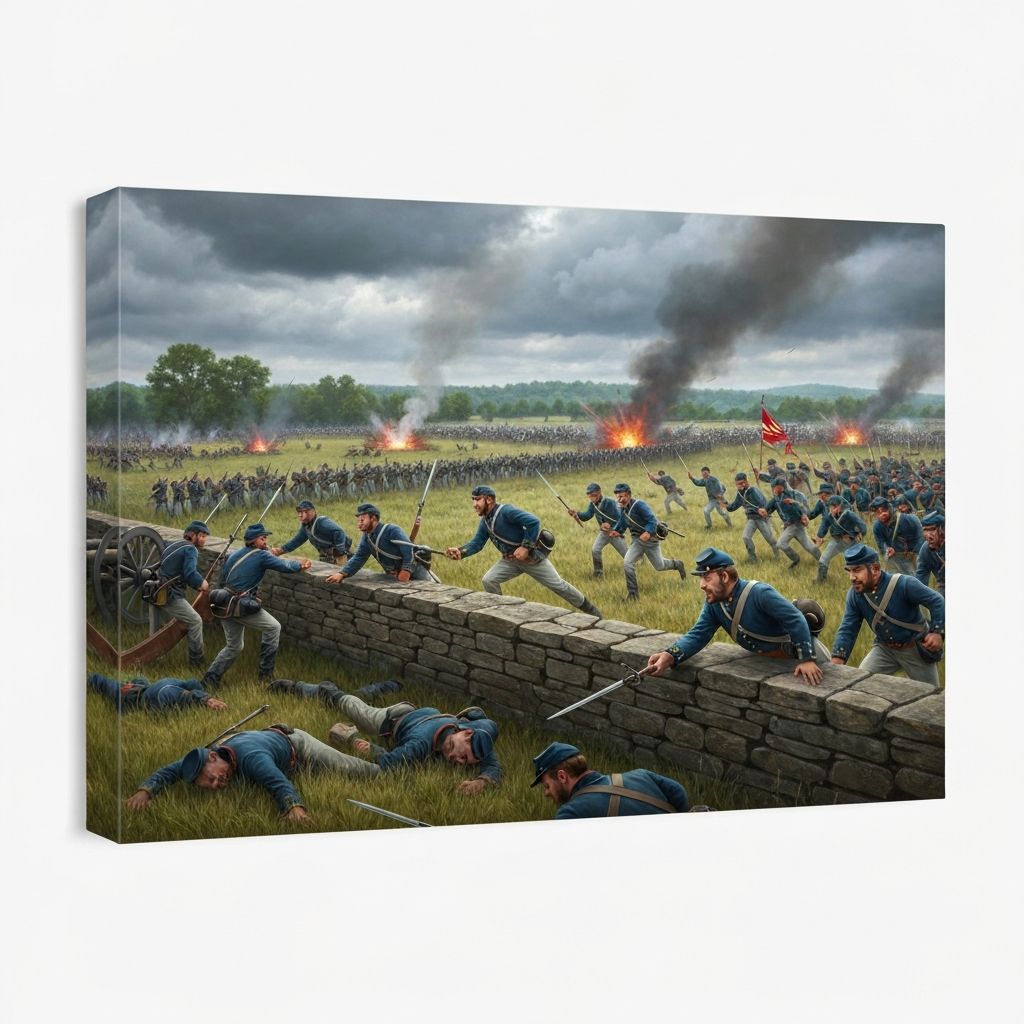
An Illustrated History
The American Civil War
1861–1865: A nation divided, tested by fire, and reborn through sacrifice
Between 1861 and 1865, the United States was torn apart by the bloodiest conflict in its history. Brother fought against brother as the nation grappled with fundamental questions about freedom, unity, and the meaning of democracy. This is the story of that great struggle—told through vivid illustrations and the voices of those who lived it.
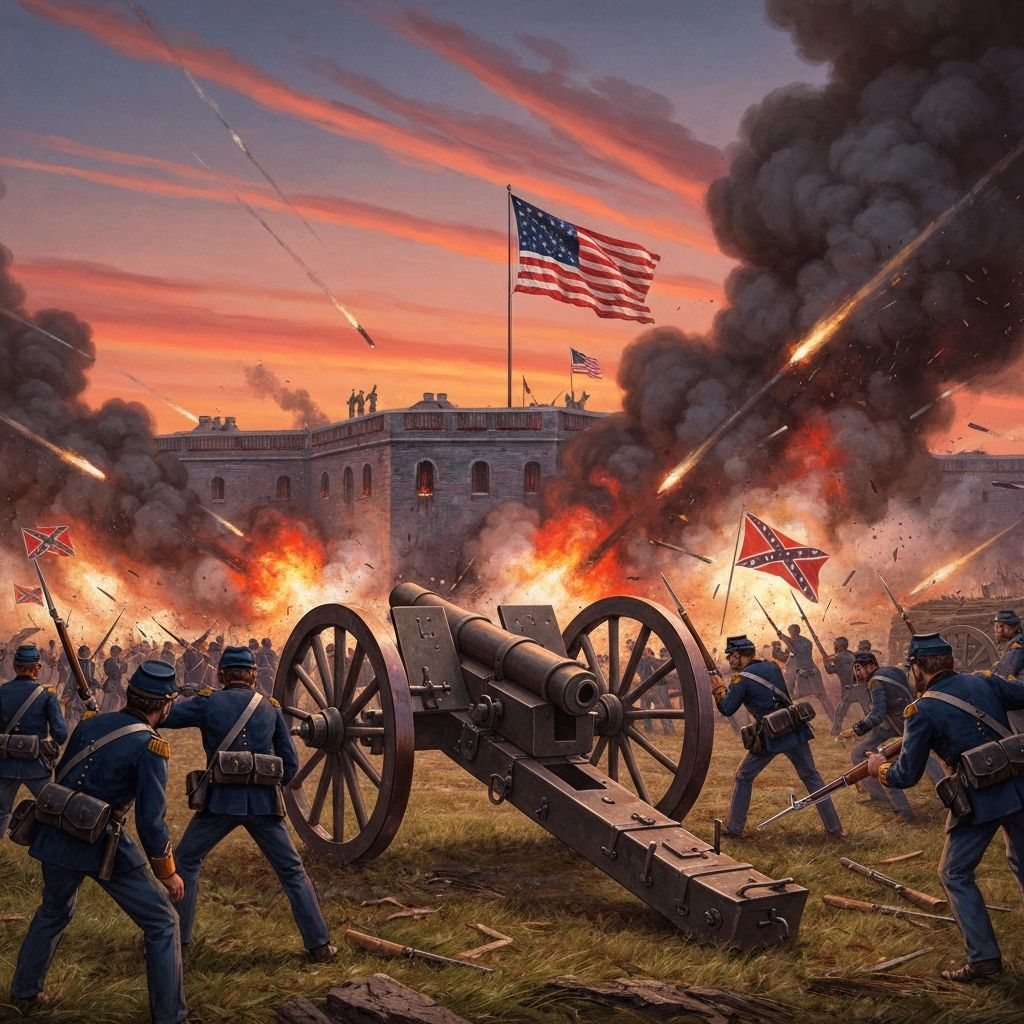
The First Shots at Fort Sumter
April 12, 1861
As dawn broke over Charleston Harbor on April 12, 1861, Confederate batteries opened fire on Fort Sumter, a federal installation held by Major Robert Anderson and his small garrison. For thirty-four hours, shells rained down upon the fort's brick walls while the nation held its breath.
The attack was the culmination of months of tension following the secession of seven Southern states. When the smoke finally cleared and Anderson surrendered, not a single soldier had died in combat—yet the bloodiest war in American history had begun. President Lincoln called for 75,000 volunteers, and four more states joined the Confederacy. There would be no turning back.
"At 4:30 a.m. the heavy booming of guns woke the people in the city... I can not express to you the feeling of intense anxiety and suspense that has possessed us all."
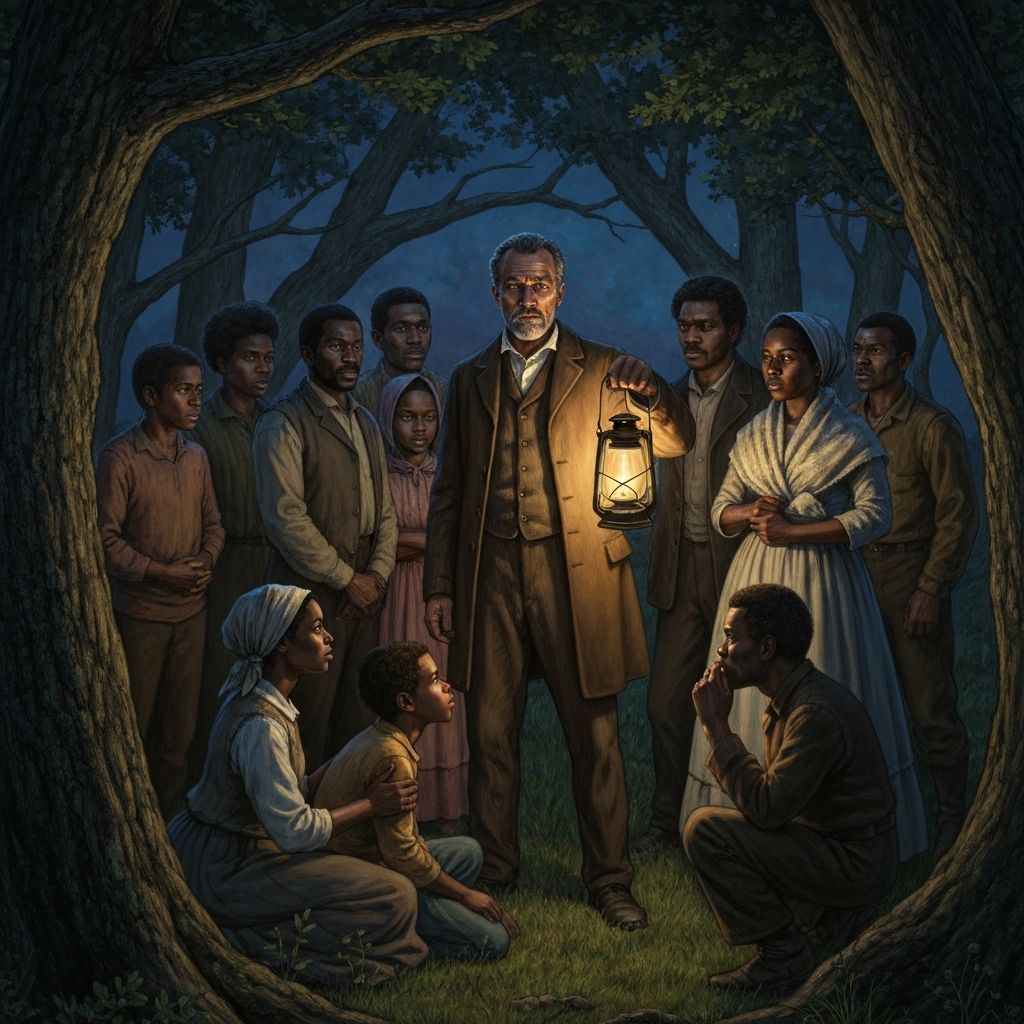
The Underground Railroad
1850s-1865
Long before the first shots were fired, a secret war for freedom was already being waged. The Underground Railroad—neither underground nor a railroad—was a clandestine network of safe houses, hidden routes, and courageous conductors who risked everything to guide enslaved people to freedom in the North.
On moonless nights, families clutching their few possessions followed the North Star through swamps and forests, trusting strangers with their lives. Harriet Tubman, who escaped slavery herself, returned nineteen times to lead more than three hundred people to freedom, never losing a single passenger. "I was the conductor of the Underground Railroad for eight years," she later said, "and I can say what most conductors can't say—I never ran my train off the track and I never lost a passenger."
"When I found I had crossed that line, I looked at my hands to see if I was the same person. There was such a glory over everything."
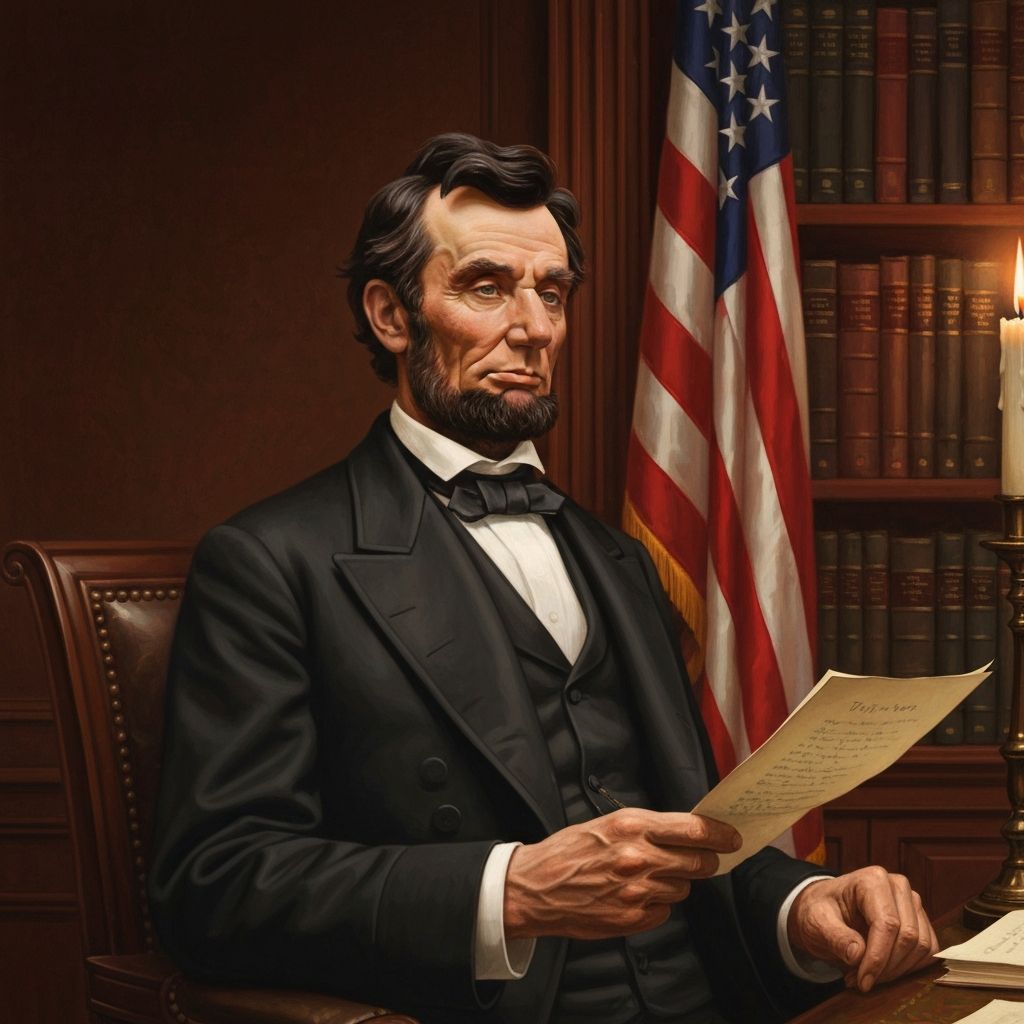
The Weight of Command
1861-1865
In the quiet hours of night, when the White House halls fell silent, Abraham Lincoln wrestled with decisions that would determine the fate of millions. The self-taught lawyer from Illinois, who had risen from a log cabin to the presidency, now bore the weight of a fractured nation.
Lincoln understood that this was not merely a war to preserve the Union—it was a battle for the soul of democracy itself. "If we fail," he wrote, "it will go far to prove the incapability of the people to govern themselves." With wisdom, patience, and an unshakeable moral compass, he guided the nation through its darkest hours, growing in stature even as the war grew in horror.
"I claim not to have controlled events, but confess plainly that events have controlled me."
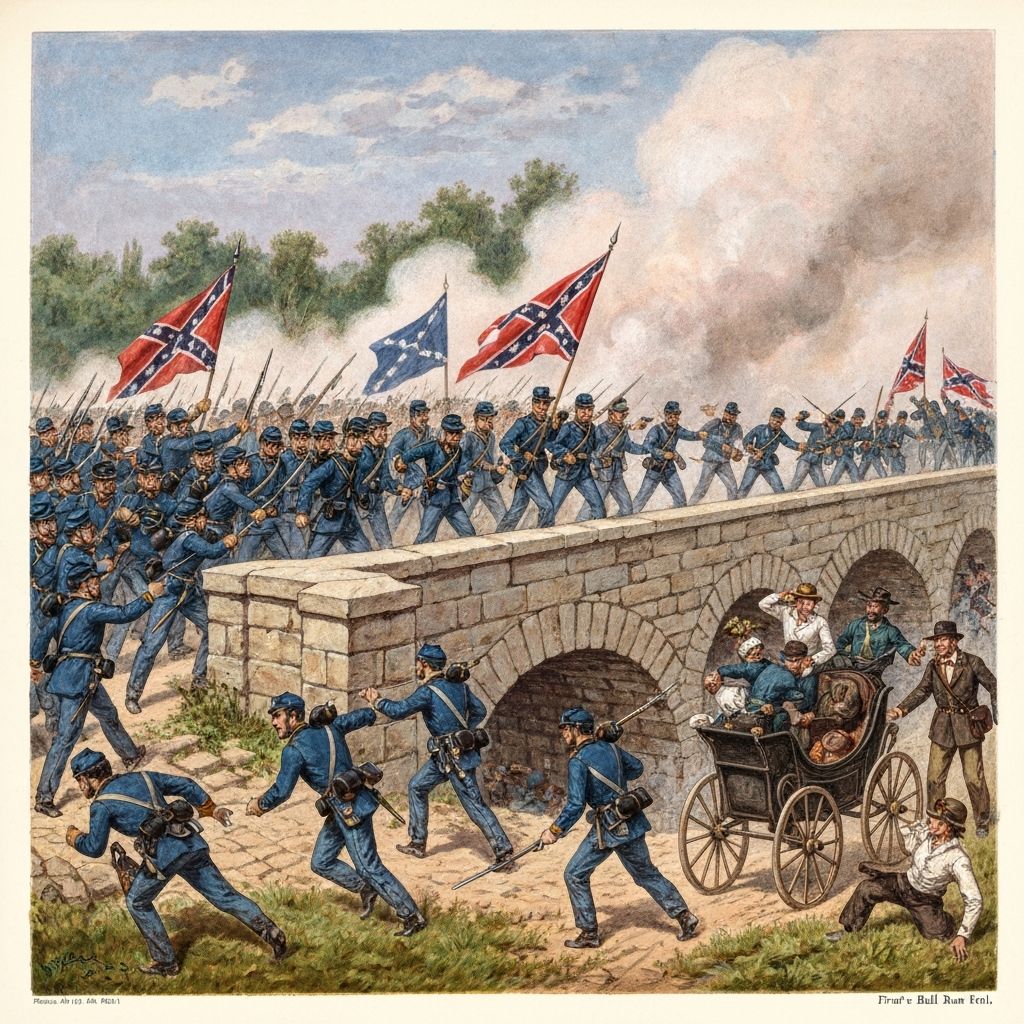
The Rout at Bull Run
July 21, 1861
The first great battle of the war shattered the illusion that this would be a short, glorious affair. Washington socialites had packed picnic baskets and driven their carriages to Manassas, Virginia, expecting to watch Union forces crush the rebellion in an afternoon's entertainment.
Instead, they witnessed a disaster. After initial Union advances, Confederate reinforcements arrived—their rebel yell piercing the summer air—and the Union army broke. The retreat became a rout, soldiers and civilians clogging the roads back to Washington in panic. The nation awoke to a terrible truth: this war would not be won in ninety days. It would be long, it would be bloody, and it would test the very foundations of the republic.
"Today will be known as BLACK MONDAY. We are utterly and disgracefully routed, beaten, whipped."
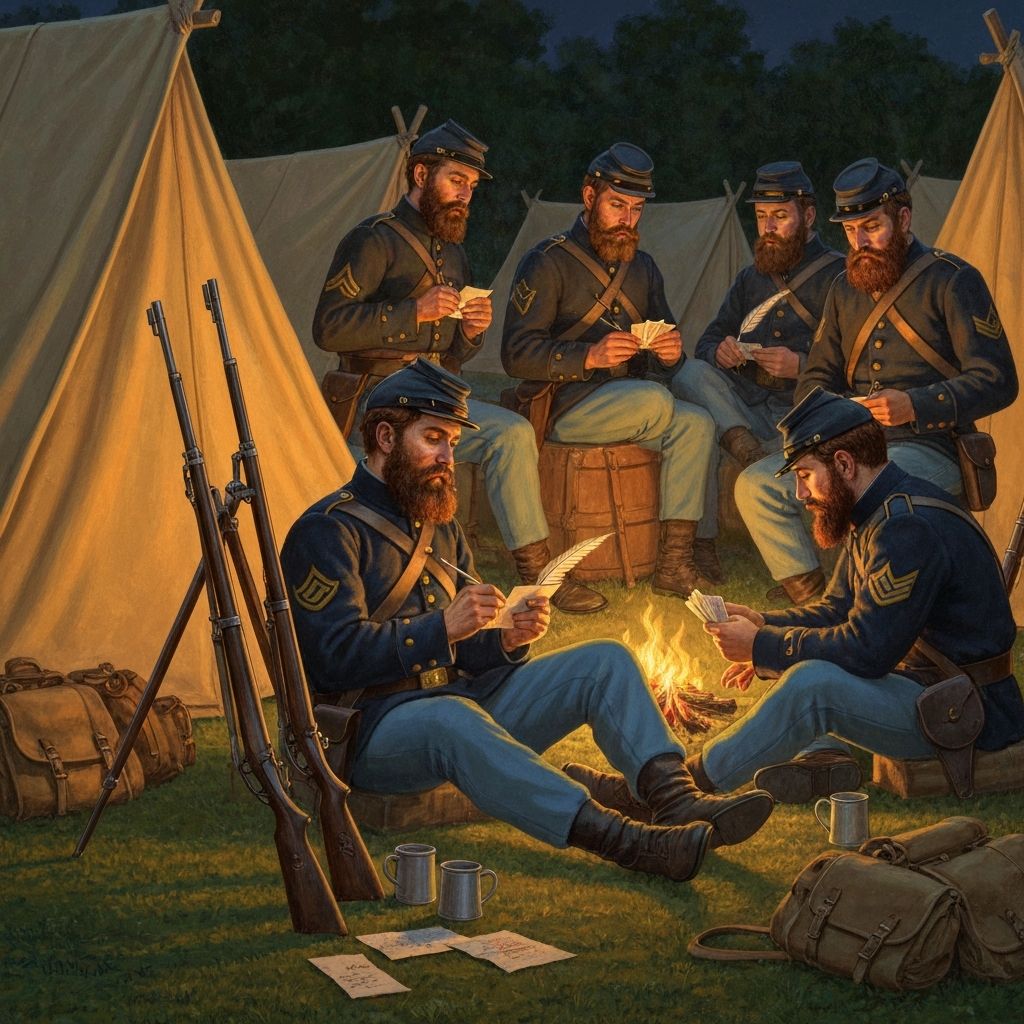
Life in the Camps
Throughout the War
Between the great battles, soldiers on both sides spent long months in camp—drilling, waiting, and longing for home. Around countless campfires, young men who had never traveled far from their villages now found themselves hundreds of miles away, facing an uncertain future.
They wrote letters to sweethearts and mothers, played cards to pass the endless hours, and formed bonds of brotherhood that would last a lifetime—or end tomorrow in battle. Disease claimed more lives than bullets, and the romantic notions of war that had sent them marching off with flags and fanfare slowly gave way to the grim reality of mud, hardtack, and homesickness.
"I never knew what it was to be a soldier until now... We have been in the mud and rain for days."
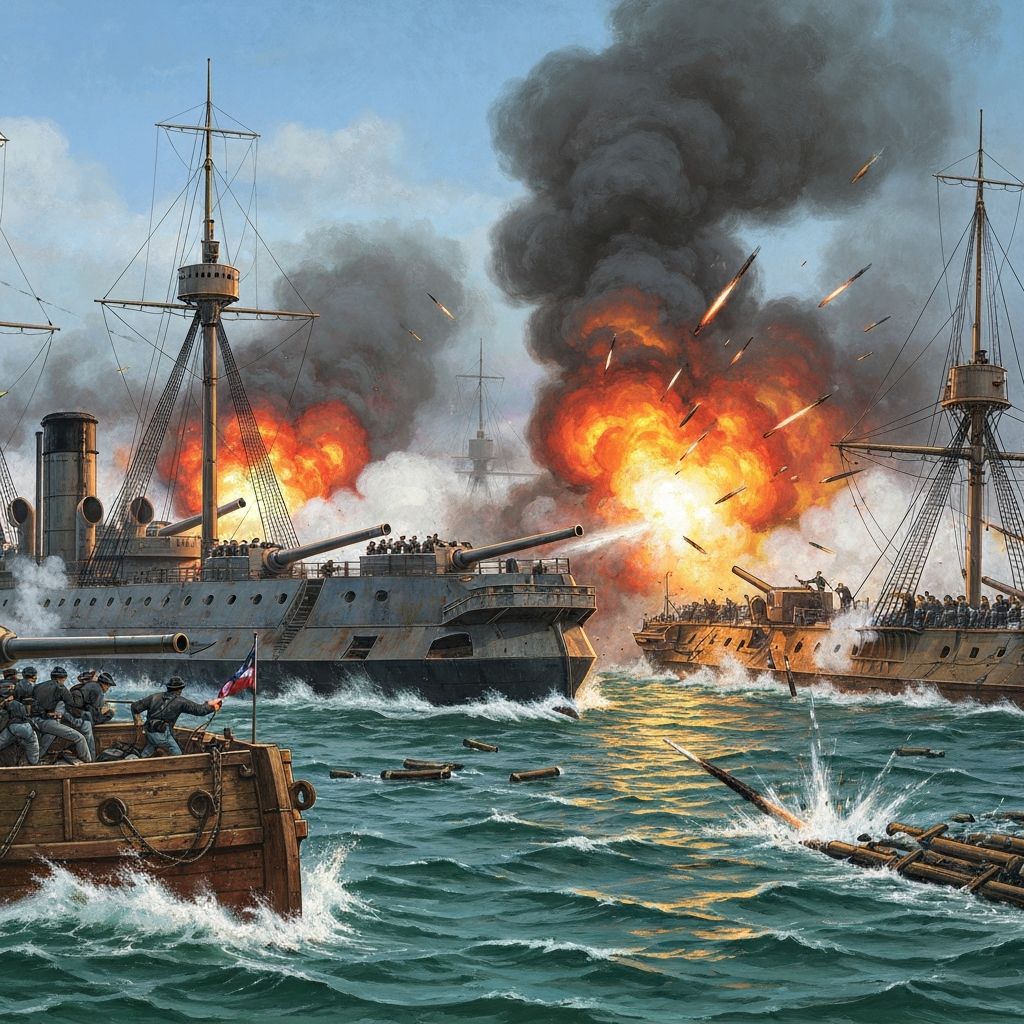
Revolution at Sea
March 9, 1862
On the morning of March 9, 1862, two strange vessels met in the waters of Hampton Roads, Virginia—and naval warfare was changed forever. The USS Monitor, looking like "a cheese box on a raft," faced the CSS Virginia (formerly the Merrimack), a salvaged Union ship transformed into an armored Confederate ram.
The day before, the Virginia had destroyed two wooden Union warships with ease, threatening to break the Union blockade. But the Monitor arrived overnight, and their duel—iron against iron, cannon against cannon—ended in a draw. Neither ship was destroyed, but every wooden navy in the world was made obsolete in a single afternoon. The age of ironclads had begun.
"You can form no conception of the noise, the smoke, the shaking of the turret, and the jar of being struck."
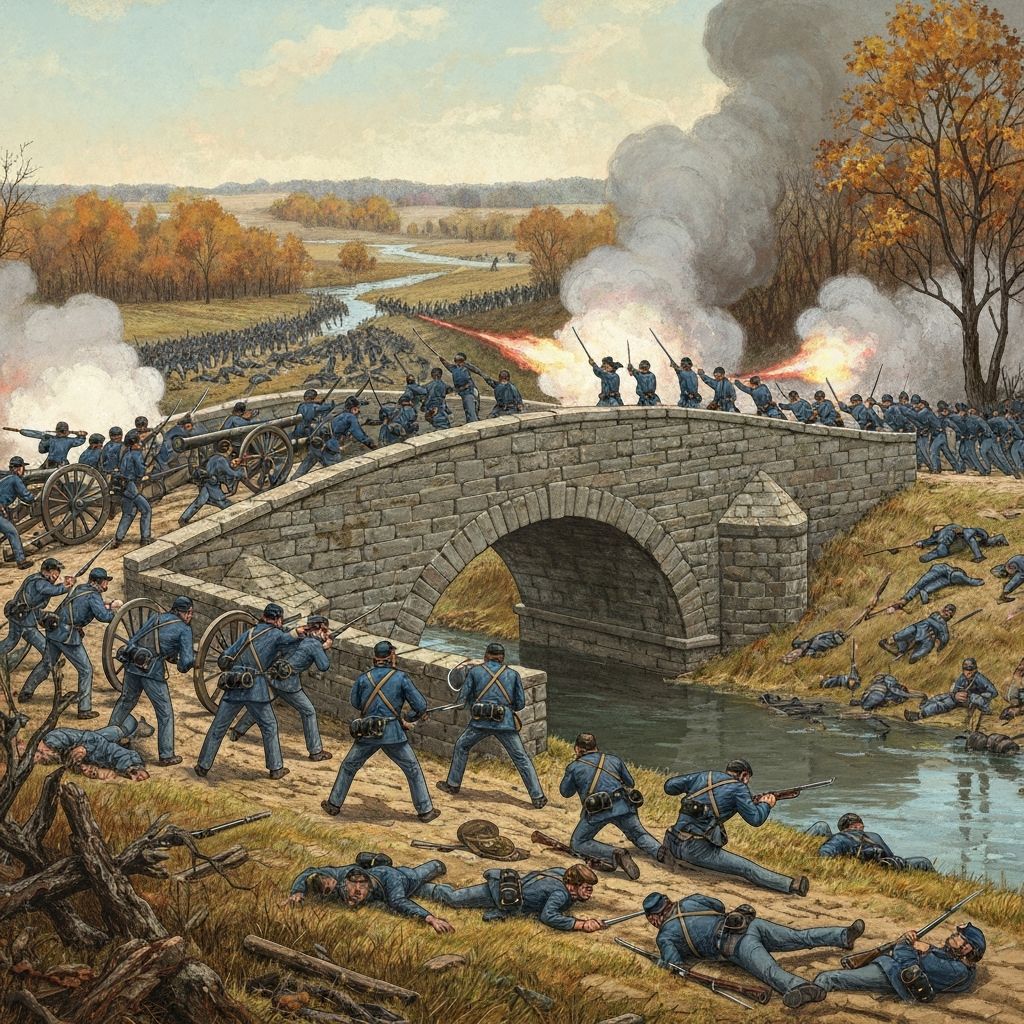
The Bloodiest Day
September 17, 1862
In a single day along Antietam Creek in Maryland, more Americans fell than on any other day in the nation's history—before or since. By nightfall, nearly 23,000 men lay dead, wounded, or missing, their bodies carpeting cornfields and filling sunken roads.
The battle was tactically inconclusive, but strategically transformative. Lee's invasion of the North had been stopped, giving Lincoln the victory he needed to announce the Emancipation Proclamation. The photographs Alexander Gardner took in the aftermath—the first widely-seen images of battlefield dead—brought the horror of war home to Northern parlors. "Let him who wishes to know what war is look at this series of illustrations," wrote the New York Times.
"The dead were almost in line, as they had stood in their ranks a few moments before. It was a ghastly sight."
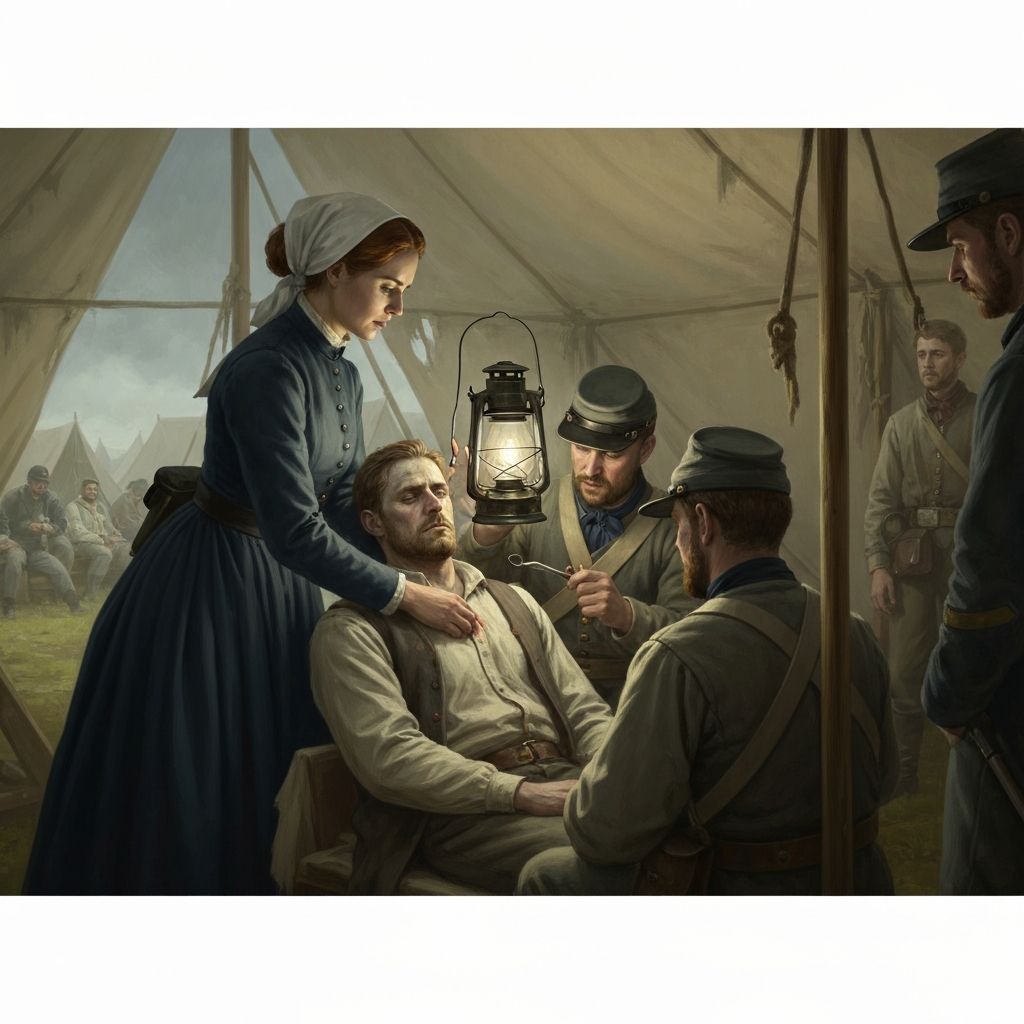
Angels of the Battlefield
1861-1865
In field hospitals that were little more than blood-soaked tents, a new kind of hero emerged. Women like Clara Barton, who would later found the American Red Cross, brought supplies, comfort, and skilled care to thousands of wounded men. She worked so close to the front lines that once a bullet passed through her sleeve and killed the soldier she was tending.
The war transformed nursing from a domestic duty into a respected profession. More than 3,000 women served as paid nurses for the Union alone, challenging Victorian notions of proper feminine behavior. They dressed wounds, assisted in amputations, wrote letters for dying soldiers, and brought order to chaos. "I have no fear of death or battle," wrote one nurse. "I am here to serve."
"I may be compelled to face danger, but never fear it, and while our soldiers can stand and fight, I can stand and feed and nurse them."
The High Water Mark
July 1-3, 1863
For three sweltering July days in the Pennsylvania countryside, the fate of the Confederacy hung in the balance. General Robert E. Lee had invaded the North, hoping a decisive victory would break Union morale and force peace negotiations. At a crossroads town called Gettysburg, he met the Army of the Potomac under George Meade.
On the third day, Lee ordered a desperate assault—12,500 men charging across nearly a mile of open ground toward the Union center on Cemetery Ridge. It became known as Pickett's Charge, and it became a slaughter. When the survivors staggered back, Lee rode among them, repeating "It is all my fault." The tide of war had turned irreversibly northward.
"It was not war, it was murder."
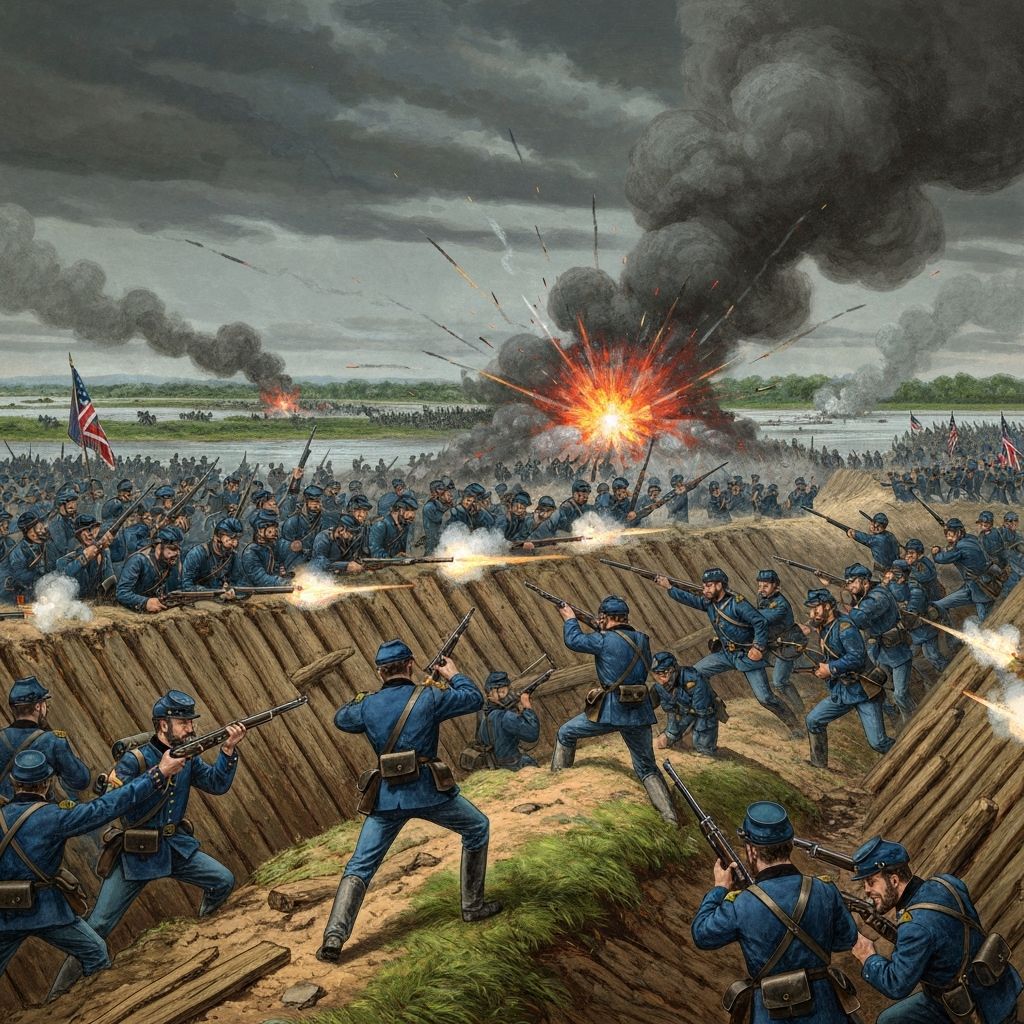
The Gibraltar of the West
May 18 - July 4, 1863
While the world watched Gettysburg, an equally decisive campaign unfolded along the Mississippi. Vicksburg, perched on high bluffs commanding the river, was the last Confederate stronghold blocking Union control of this vital waterway. "Vicksburg is the key," Lincoln said. "The war can never be brought to a close until that key is in our pocket."
For forty-seven days, Grant besieged the city. Soldiers tunneled toward Confederate lines while citizens cowered in caves carved into hillsides, surviving on mule meat and rats. On July 4, 1863—one day after Pickett's Charge failed at Gettysburg—Vicksburg surrendered. The Confederacy was cut in two, and the Father of Waters, as Lincoln poetically put it, again flowed "unvexed to the sea."
"The fate of the Confederacy was sealed when Vicksburg fell."
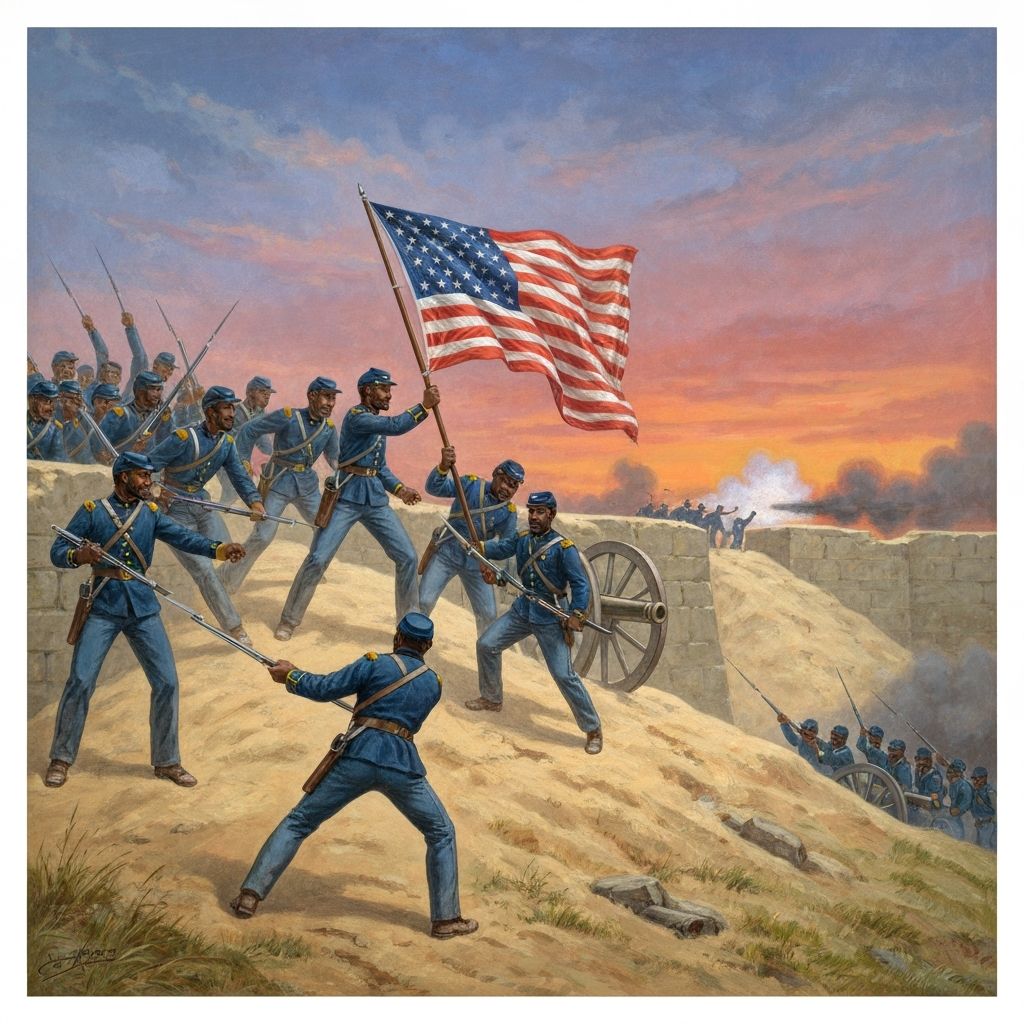
Glory of the 54th
July 18, 1863
At dusk on July 18, 1863, the 54th Massachusetts Infantry—one of the first African American regiments in the Union Army—led a desperate assault on Fort Wagner, a Confederate stronghold guarding Charleston Harbor. Colonel Robert Gould Shaw, their young white commander, fell among the first. The regiment charged on.
Though the attack failed and nearly half the regiment fell, the 54th proved beyond doubt that Black soldiers would fight with the same courage and determination as any. "It made Fort Wagner such a name to the colored race as Bunker Hill has been for ninety years to the white Yankees," wrote the New York Tribune. Their sacrifice helped pave the way for 180,000 Black men who would serve in Union blue before the war's end.
"If we die, we die as men, not as slaves."
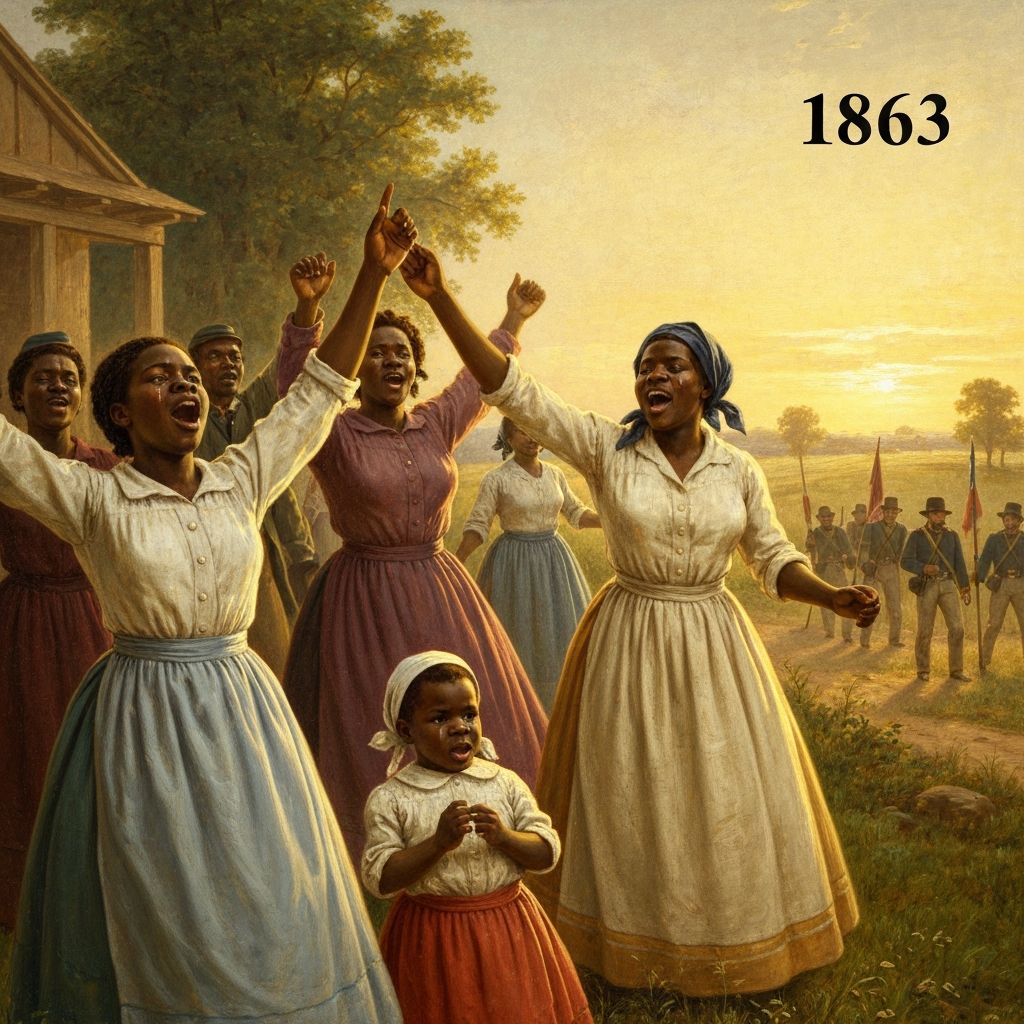
The Jubilee of Freedom
January 1, 1863
When news of the Emancipation Proclamation spread through slave quarters and contraband camps, something extraordinary happened. Men and women who had been property were now, in the eyes of the Union government, free. Church bells rang, prayers rose, and tears flowed as the promise of liberty—so long denied—finally seemed within reach.
The Proclamation was a war measure, applying only to Confederate territory, but its moral power was absolute. It transformed the war from a struggle to preserve the Union into a crusade for human freedom. Nearly 200,000 Black men would serve in Union forces before war's end, fighting for their own liberation and helping to save the nation that had enslaved them.
"Shout aloud for joy, for the Lord has done marvelous things."
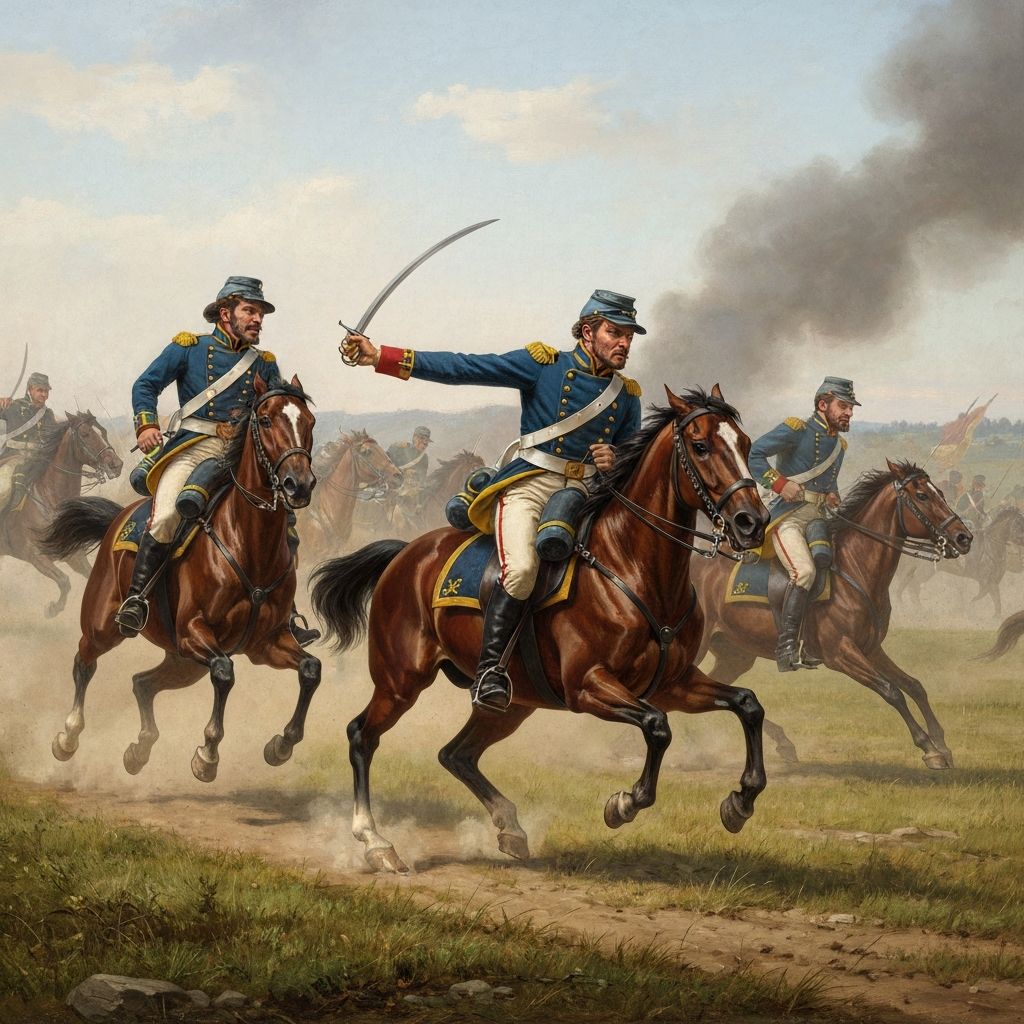
Thunder of Hooves
1863-1865
The mounted arm of both armies evolved from scouts and messengers into fearsome strike forces capable of independent operations deep behind enemy lines. Cavalry charges, sabers flashing in the sun, became some of the war's most dramatic moments—though more often cavalrymen fought dismounted with carbines.
Leaders like J.E.B. Stuart, Phil Sheridan, and Nathan Bedford Forrest became legends. Stuart's ride around McClellan's army humiliated the Union; Sheridan's destruction of the Shenandoah Valley broke Confederate supply lines; Forrest's lightning raids terrorized Union forces throughout the Western theater. By war's end, Union cavalry dominance helped seal the Confederacy's fate.
"Get there first with the most men."
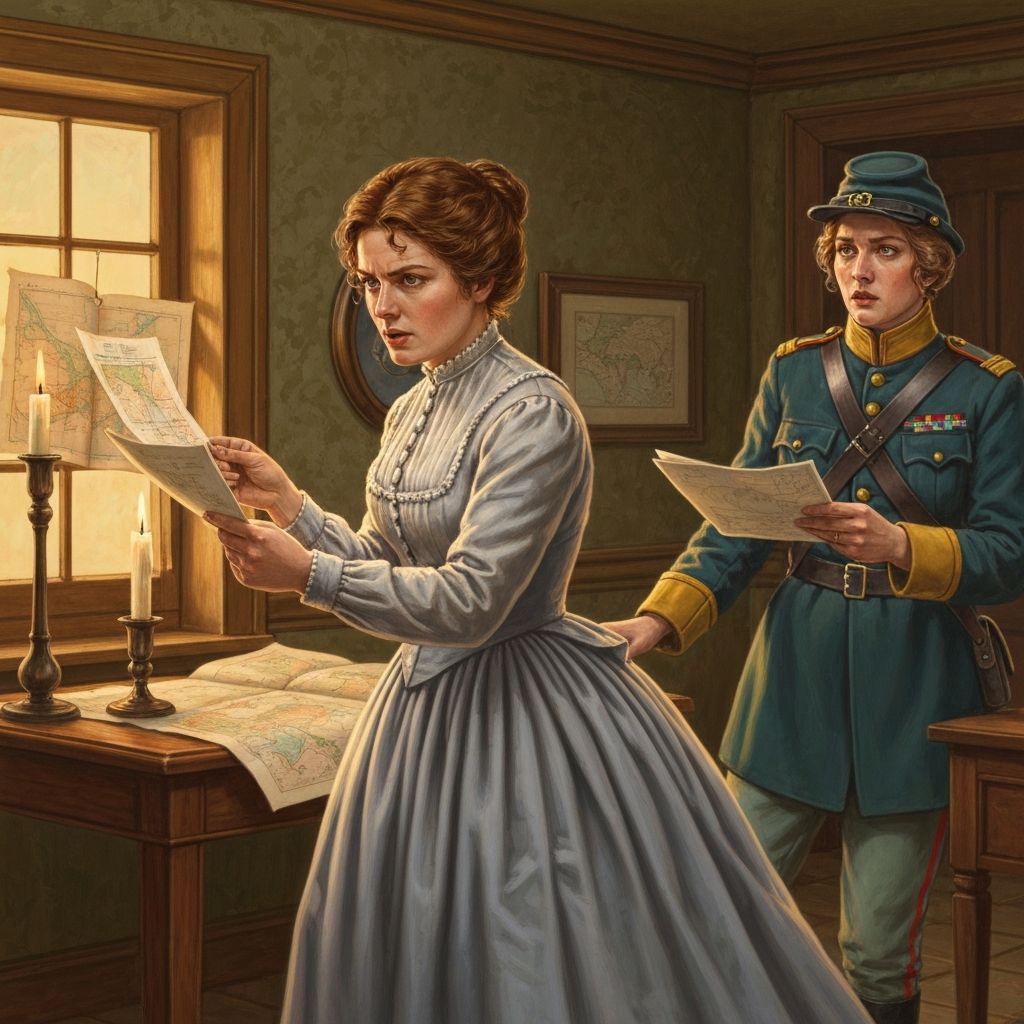
The Secret Warriors
1861-1865
The Civil War was not fought only by men. Hundreds of women served as spies, smuggling information sewn into their petticoats or hidden in their elaborate hairstyles. Others disguised themselves as men and enlisted, their true identities sometimes discovered only when wounded or killed.
Rose O'Neal Greenhow gathered intelligence for the Confederacy from Washington society parlors. Elizabeth Van Lew ran a spy ring from her Richmond mansion while pretending to be an eccentric old maid. Sarah Emma Edmonds served two years as "Franklin Thompson" in the Union army. These women risked execution to serve causes they believed in, proving that courage knew no gender.
"I am ready to die for my country. I am ready to serve my country as a man."
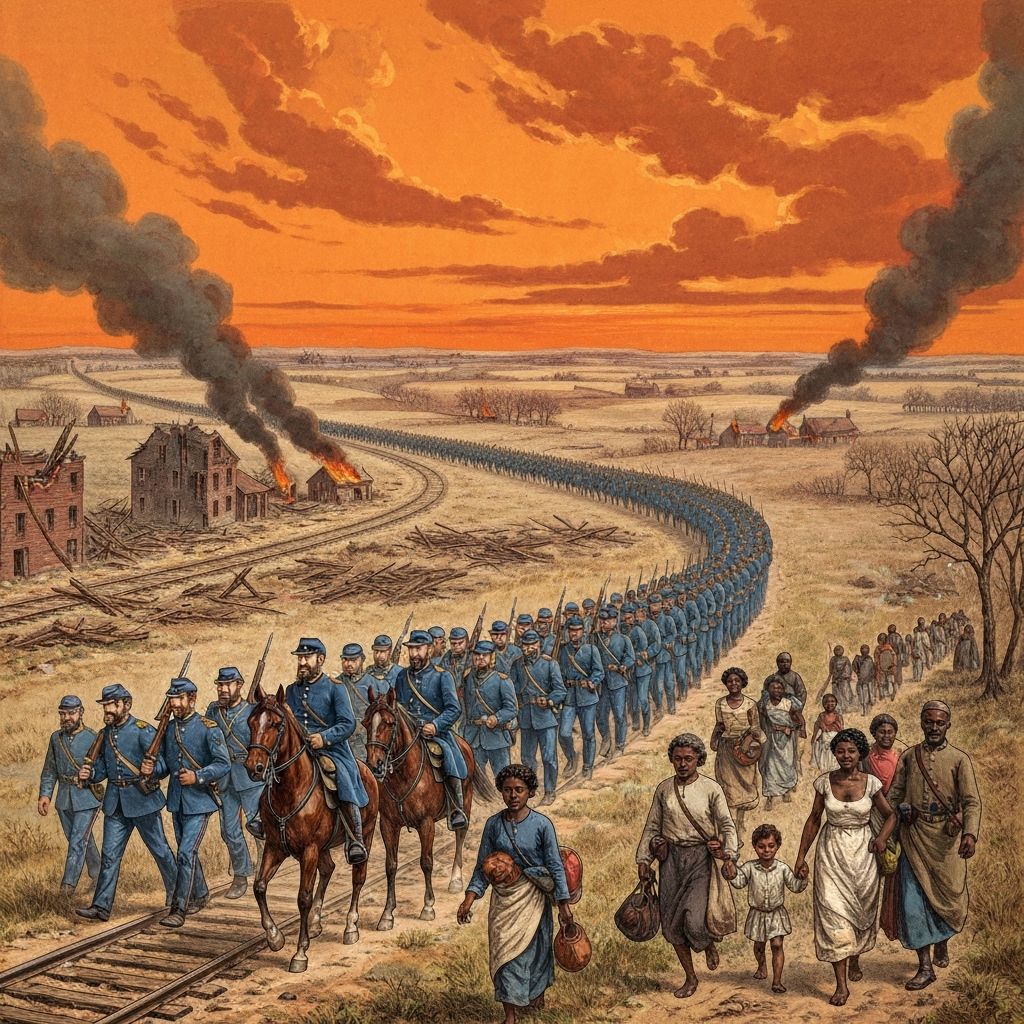
The March to the Sea
November-December 1864
After capturing Atlanta in September 1864, General William T. Sherman proposed something radical: cut loose from supply lines and march his army across Georgia to the sea, living off the land and destroying everything of military value in a sixty-mile-wide swath of devastation.
For thirty-two days, 62,000 Union soldiers swept through the heart of the Confederacy, tearing up railroads, burning warehouses, and freeing thousands of enslaved people who joined the march. "War is cruelty," Sherman said. "The crueler it is, the sooner it will be over." When he reached Savannah in December, he telegraphed Lincoln: "I beg to present you as a Christmas gift the city of Savannah."
"We have devoured the land. All the people retire before us, and desolation is behind."
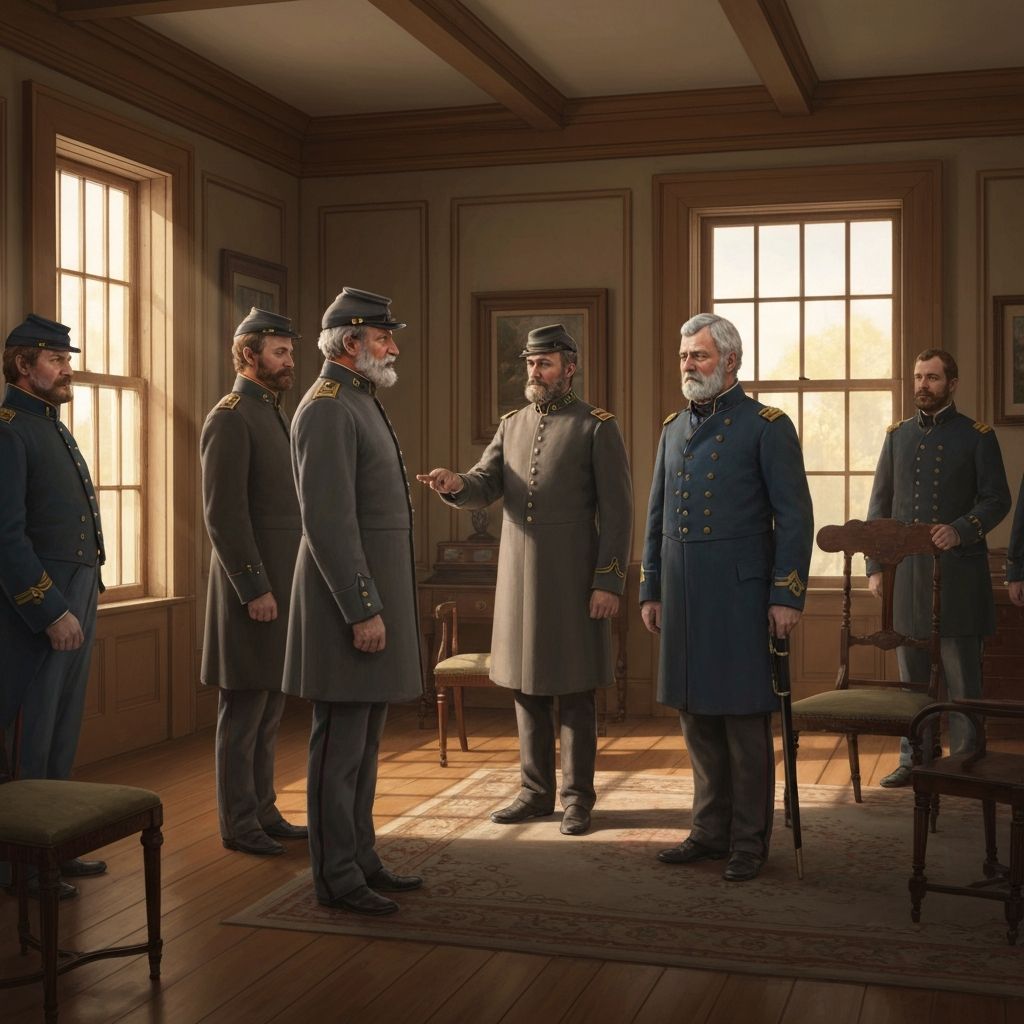
Peace at Appomattox
April 9, 1865
In the parlor of Wilmer McLean's home in the village of Appomattox Court House, two generals met to end the war. Robert E. Lee, resplendent in his finest uniform with a jeweled sword, faced Ulysses S. Grant, who arrived mud-spattered and wearing a private's coat.
The terms Grant offered were generous—Confederate soldiers could go home if they pledged not to take up arms again, and officers could keep their sidearms and horses. "This will do much toward conciliating our people," Lee said quietly. As Lee rode away, Union soldiers began to cheer, but Grant silenced them. "The war is over," he said. "The rebels are our countrymen again."
"I felt like anything rather than rejoicing at the downfall of a foe who had fought so long and valiantly."
A Nation Mourns
April 14, 1865
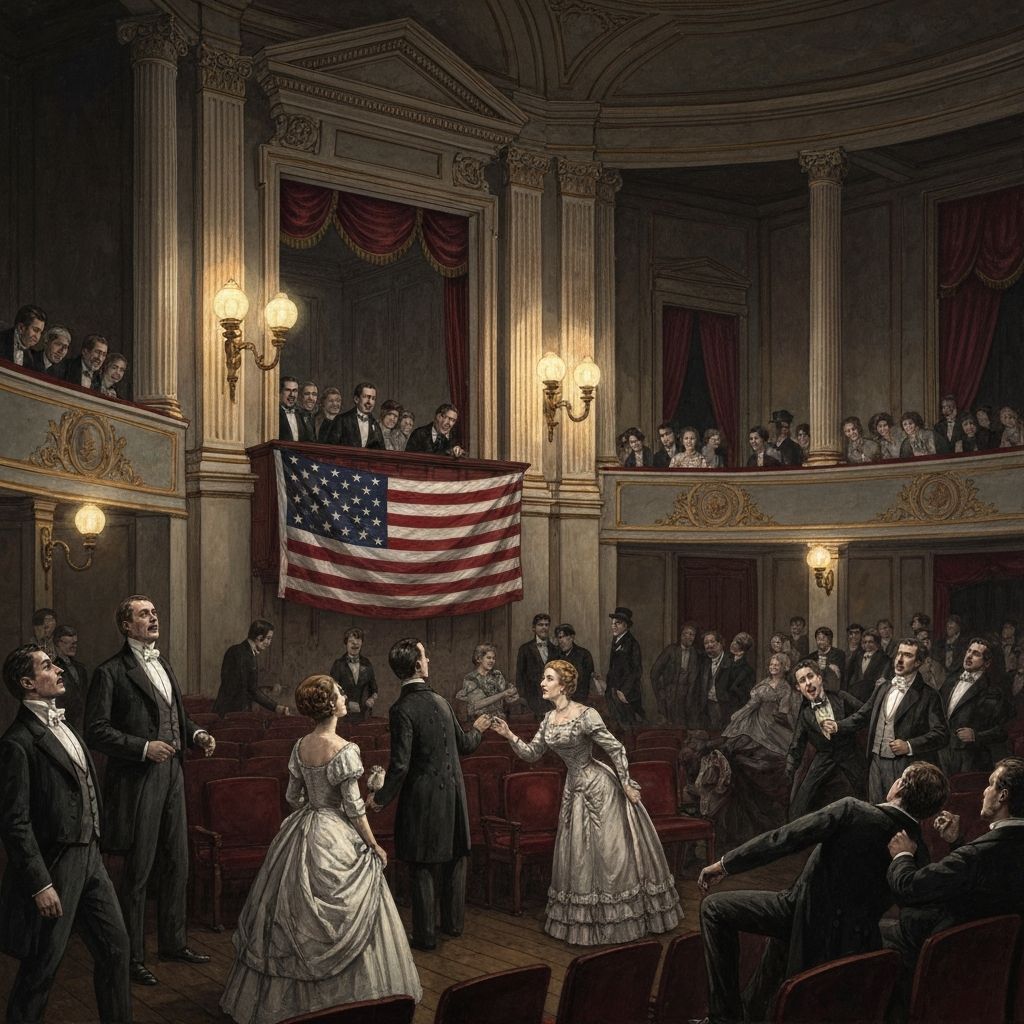
Five days after Lee's surrender, as the nation began to celebrate peace, President Lincoln and his wife attended a comedy at Ford's Theatre in Washington. In the presidential box, decorated with flags and bunting, they laughed along with the audience—unaware that actor John Wilkes Booth was climbing the stairs with a derringer pistol.
At 10:15 p.m., a single shot rang out. Lincoln slumped forward. Booth leaped to the stage, shouted "Sic semper tyrannis!" and escaped into the night. Lincoln died the next morning, and a war-weary nation that had just begun to hope was plunged into grief. "Now he belongs to the ages," Secretary Stanton said. The Great Emancipator would not see the peace he had fought so hard to win.
"With malice toward none, with charity for all... let us strive on to finish the work we are in, to bind up the nation's wounds."
The Long Road Home
1865 and Beyond
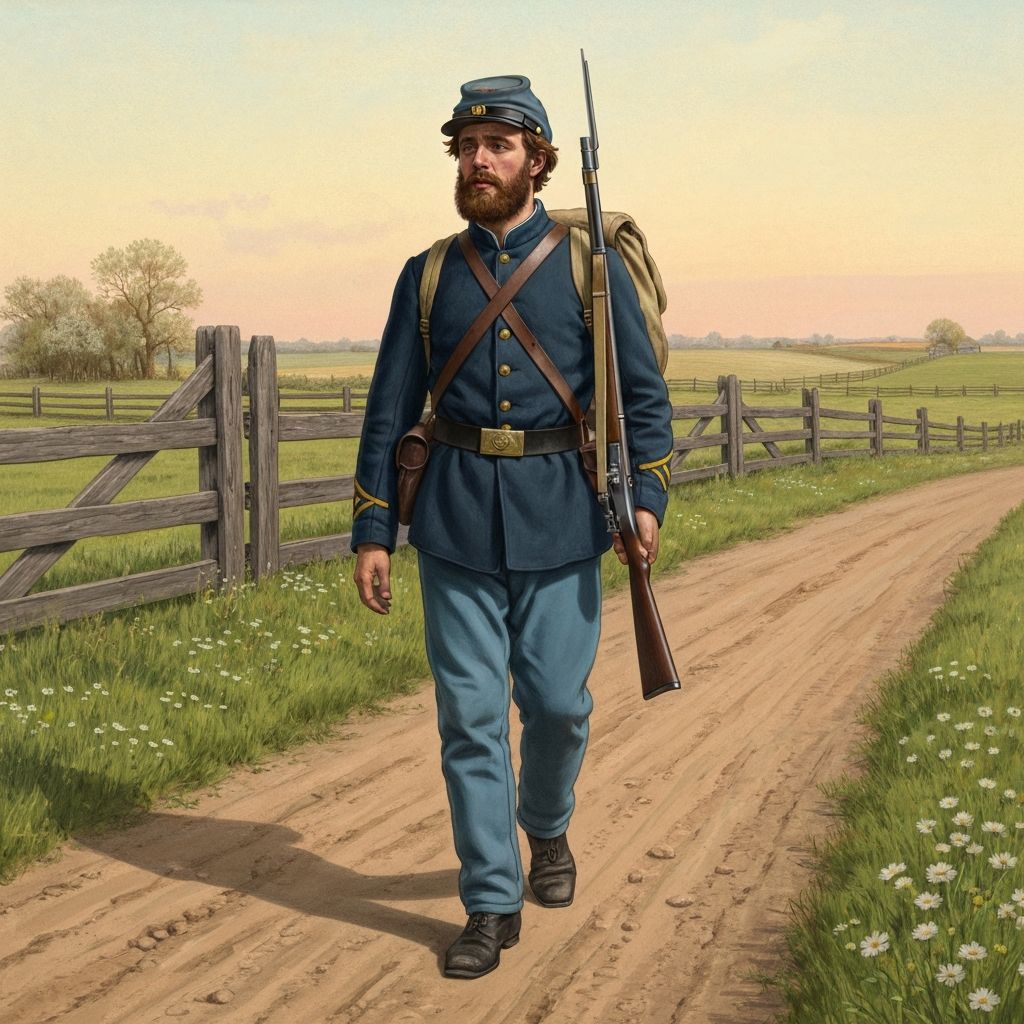
When the guns fell silent at last, more than two million soldiers began the long journey home. They returned to farms overgrown with weeds, to families that had changed, to sweethearts who had married others, and to empty chairs where brothers and fathers once sat.
Some found they could not speak of what they had seen. Others would spend decades fighting the war again in memory and dream. They had been tested in ways no American generation had been tested before, and they had endured. Now came the harder task: to rebuild, to reconcile, and to bind up the wounds of a nation still bleeding from its great ordeal.
"The war is over—the war is over! But oh, the changes it has brought!"
A Legacy Remembered
The Civil War remains America's defining conflict—a crucible that tested whether a nation "conceived in Liberty, and dedicated to the proposition that all men are created equal" could long endure. More than 620,000 soldiers perished, countless families were shattered, and the landscape of American life was forever transformed.
Yet from this devastation emerged a renewed nation—one that had taken its first steps toward fulfilling the promises of its founding. The struggle for equality would continue for generations, but the shackles of slavery had been broken, and a new birth of freedom had begun.